Nederlands
 Deutschland
 Österreich
 Schweiz
 English
 Français
 Čeština
 Dansk
 Español
 Suomi
 Italiano
 Português
 Svenska
 Polski
 Ireland
 Ελληνικά
 Română
 Magyar
 Eesti
 Български
Sustainable Business Practices Using the CSR Performance Ladder
Sustainability is no longer a luxury, but a requirement for staying relevant. Companies must prove that they operate responsibly,...
Read article

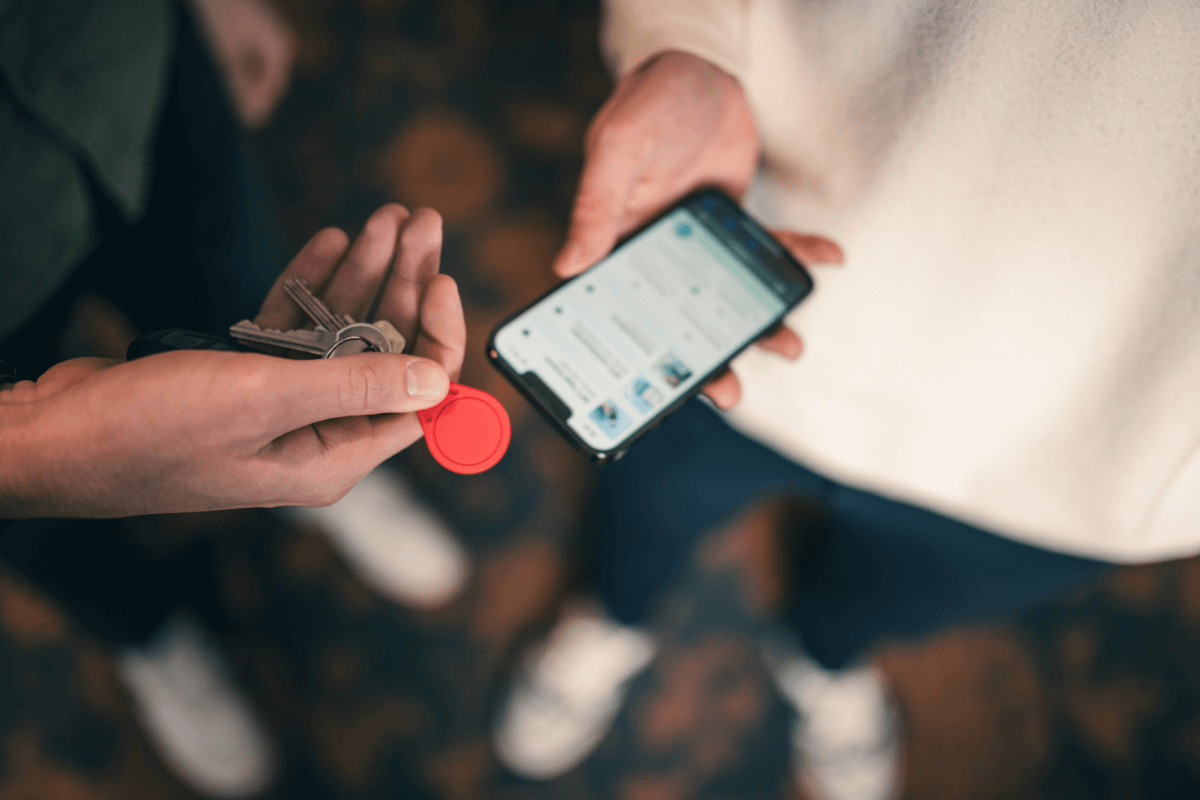
In this article, we’ll be discussing RFID readers. What exactly can you do with them? And which RFID reader do you need? We’ll explain that to you. But before we continue, you first need to understand the basics of RFID.
RFID stands for “Radio Frequency Identification,” which means that data can be transmitted via radio waves. NFC works the same way as RFID, but only over short distances, which means the applications differ. With an RFID chip, you can send specific data to an RFID reader. This makes it possible to transmit data remotely, allowing the RFID reader to trigger an action—such as opening a barrier or clocking in at work.
Buy an RFID ReaderRFID and NFC are terms that are often used interchangeably. But there is a significant difference between them. RFID operates over longer distances than NFC. While NFC has a range of about 3 centimeters, RFID can sometimes reach up to 10 meters. For this reason, RFID is used for different applications than NFC. With NFC, we often see applications such as payments and connecting to the digital world. RFID is most commonly used for tracking, time tracking, and access control.
There are several RFID chips on the market with different features and characteristics. For example, there are differences in range, security, technology, and price. One example is the MIFARE Ultralight. This chip is often used as a disposable chip and is the cheapest RFID chip. If you opt for a more advanced, higher-quality chip like the MIFARE Classic 1K, you’ll quickly end up paying a lot more.
Before you buy an RFID reader, you need to know exactly what kind of RFID chip you want to program. Not every RFID chip can be read by the same RFID reader. Just like RFID chips, there are also different types of RFID readers. Each RFID reader operates at a specific frequency, just as RFID chips do. If the reader’s frequency matches that of the RFID chip, they can communicate with each other. Only then is it possible to read and program data on the chip. The frequency is expressed in megahertz (MHz). It is therefore important to carefully check whether the RFID reader supports the MHz frequency of the RFID chip you want to program.
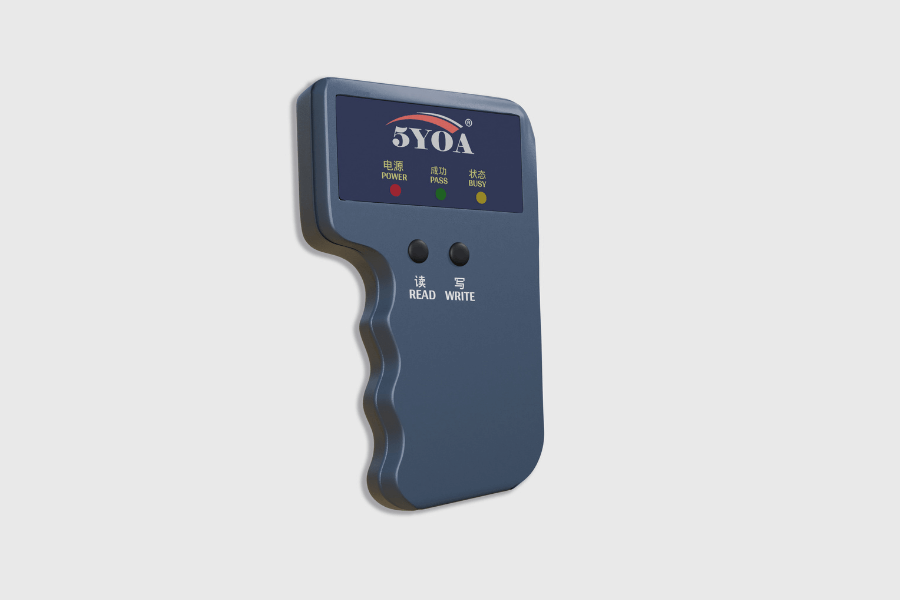
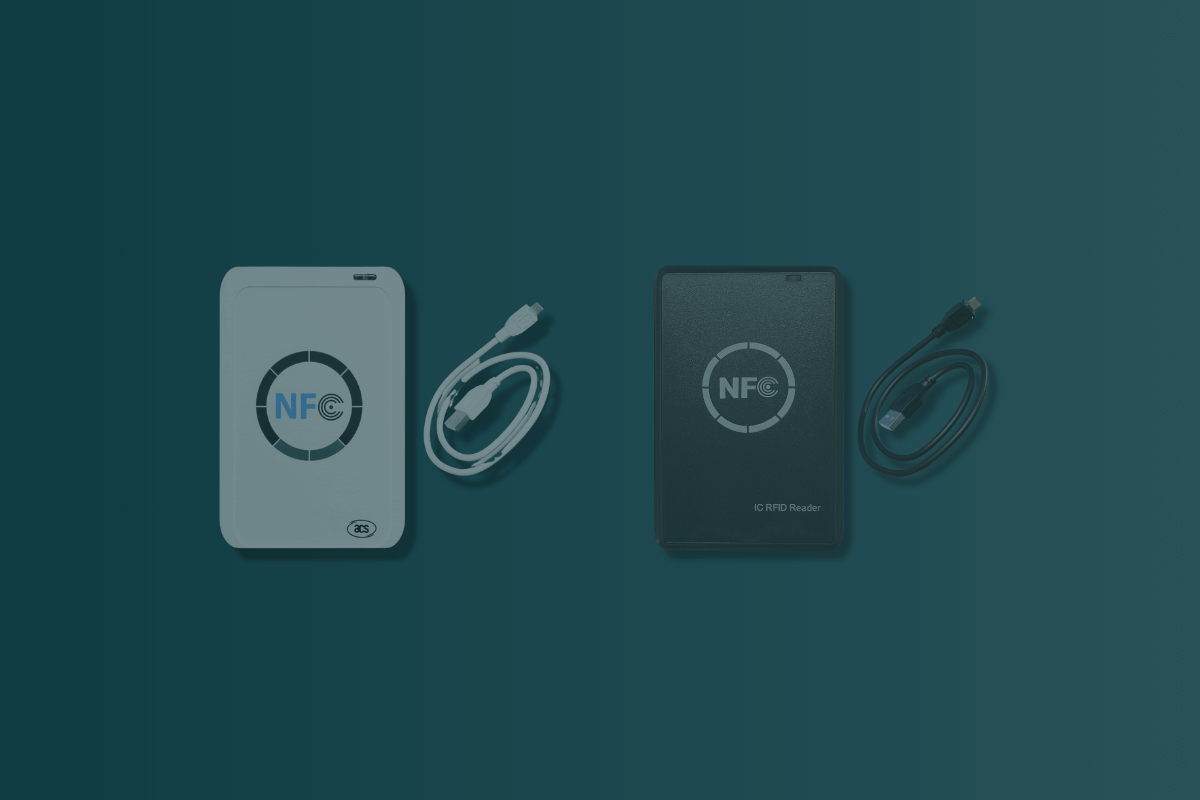
Would you like to program an Ultra High Frequency chip? Then you’ll need this RFID reader. The reader allows you to read, duplicate, and program UHF (ultra high frequency) RFID chips. Do you want to program both 125 kHz and 13.65 MHz RFID chips? Then we recommend this RFID reader. This reader is compatible with both types of chips.
You cannot program RFID chips without an RFID reader. The antenna in the RFID chip enables it to communicate with another RFID chip. Since RFID can only communicate with other RFID devices, the chip can only be programmed using an RFID reader.
With an RFID reader, there are essentially two types of tasks you can perform: programming new data and duplicating an RFID chip. First, let’s talk about duplication. If you have an RFID access card and would like to have more access cards, you can easily do this with an RFID reader. You can easily copy the chip and transfer it to a new card. Of course, you can also program new data onto the chip. You can develop this data yourself and program it onto the chip. There are various software options available for this.
Some RFID readers can also program NFC in addition to RFID, such as this NFC reader.
Buy an RFID ReaderRFID stands for “Radio Frequency Identification” and uses radio waves to transmit data between an RFID chip and an RFID reader. This makes it possible to transmit data remotely and, for example, open a barrier or clock in at work. RFID is similar to NFC, but differs in that RFID is used for longer distances. NFC can only transmit over a distance of up to 3 cm, while RFID can sometimes transmit over distances of up to 10 meters.
RFID and NFC are often used interchangeably, but there is definitely a difference between the two. RFID operates over longer distances than NFC. RFID can sometimes reach up to 10 meters, while NFC has a range of only up to 3 cm. As a result, the two terms are used for different applications. NFC is primarily used for payments and connecting to the digital world, while RFID is used for tracking, time tracking, and access control.
There are several RFID chips on the market with different features and prices. For example, there are differences in range, security, technology, and price. One example of an RFID chip is the MIFARE Ultralight. This chip is often used as a disposable chip and is the least expensive RFID chip. If you opt for a more advanced, higher-quality chip, such as the MIFARE Classic 1K, you’ll likely pay significantly more.
There are various types of RFID readers on the market that operate at specific frequencies, just like RFID chips. There are three types of frequencies in total: Low Frequency, High Frequency, and Ultra High Frequency. It’s important to know which RFID chip you want to program, because not every RFID chip can be read by the same RFID reader. The frequency is expressed in megahertz (MHz). So it’s important to check carefully whether the RFID reader supports the MHz frequency of the RFID chip you want to program.