Nederlands
 Deutschland
 Österreich
 Schweiz
 English
 Français
 Čeština
 Dansk
 Español
 Suomi
 Italiano
 Português
 Svenska
 Polski
 Ireland
 Ελληνικά
 Română
 Magyar
 Eesti
 Български
Sustainable Business Practices Using the CSR Performance Ladder
Sustainability is no longer a luxury, but a requirement for staying relevant. Companies must prove that they operate responsibly,...
Read article

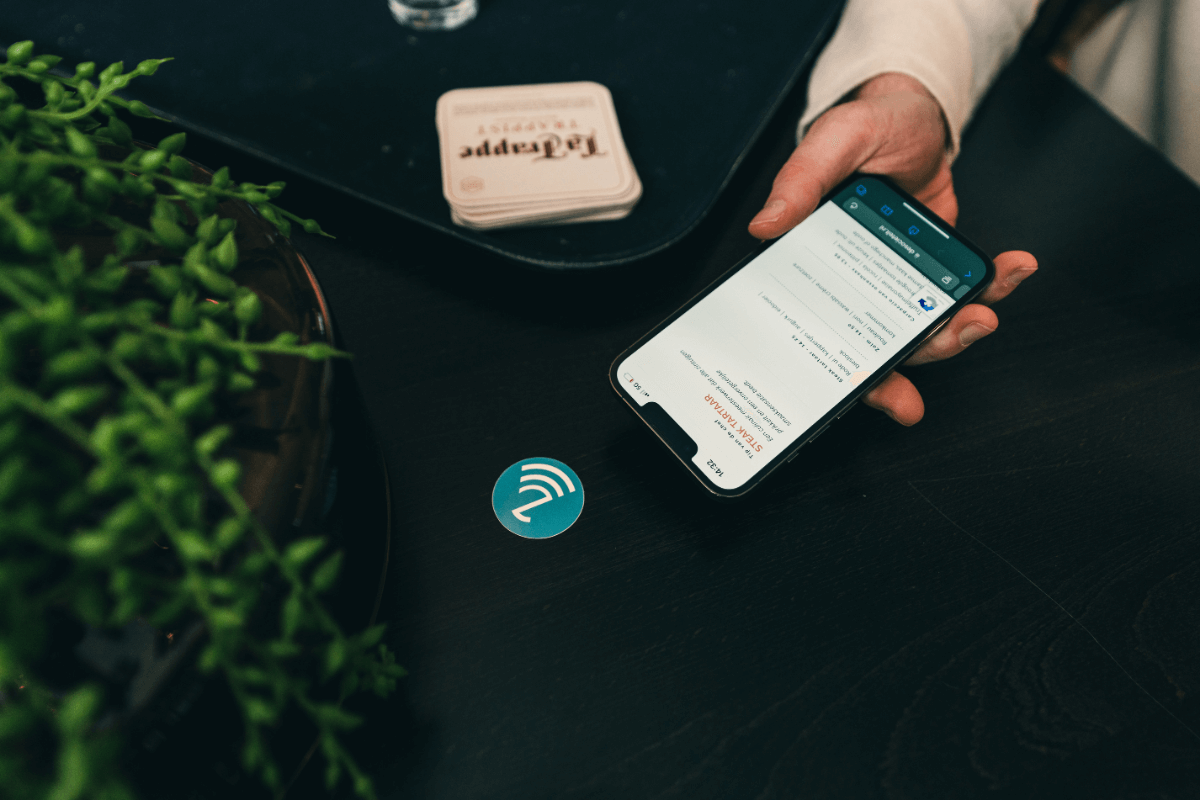
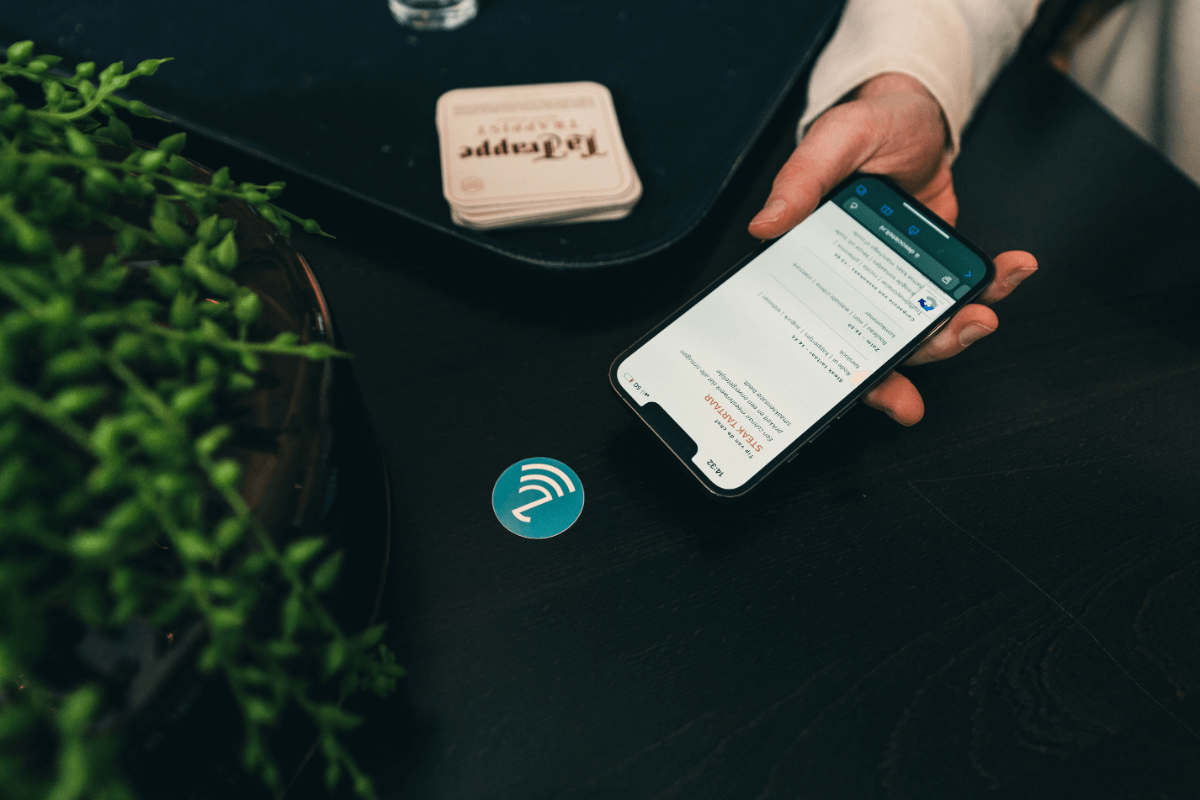
Contactless payments have become an integral part of everyday life. When standing in line at the register, you no longer have to rummage for change or a debit card. You simply hold your phone or card up to a terminal, and the transaction is complete. All of this is possible thanks to NFC technology. But what exactly is NFC payment, how does it work, and why should you consider using it?
Buy NFC tagsNFC stands for Near Field Communication. This is a wireless technology that allows data to be exchanged over short distances. Think, for example, of a payment made when you hold your phone or debit card close to a terminal. This contactless process takes place within a radius of about 4 centimeters, making it fast and secure.
The technology behind NFC payments is similar to that of RFID (Radio Frequency Identification), but NFC can do much more than just transmit information. It enables two-way communication between devices, which means that both your phone and the payment terminal can exchange data. This ensures that payments are not only processed quickly but also securely.
NFC offers numerous advantages over traditional payment methods. Here are some key reasons why NFC payments are the future of payments:
The biggest advantage of NFC payments is how fast and easy the process is. You don’t have to insert a debit card, enter a PIN, or use cash. By simply holding your phone or NFC card near the payment terminal, the payment is completed in a matter of seconds. This isn’t just convenient—it also reduces wait times at the register.
Many people wonder whether NFC payments are actually secure. The answer is a resounding yes. When you make a payment via NFC, your actual payment details are not transmitted directly. Instead, tokenization is used, whereby a unique, temporary number is generated for each transaction. This makes it virtually impossible for malicious parties to intercept and misuse your data.
In addition, most mobile devices are equipped with biometric security features such as facial recognition or fingerprint scanners, which provide extra protection. So even if your phone is stolen, strangers cannot use your payment apps without your personal verification.
Another major advantage of NFC payments is their versatility. Whether you use a smartphone, a smartwatch, or an NFC card, the technology works seamlessly with a variety of devices. This means you don’t necessarily have to buy a new phone to use this technology. In addition, more and more stores and service providers worldwide are accepting contactless payments, allowing you to pay with NFC virtually anywhere.
Although NFC payments are rapidly gaining popularity, they are not yet fully integrated everywhere. Most major retailers and supermarkets now offer contactless payment options. In many countries, you can also use NFC technology to pay for public transportation. However, there are still smaller businesses and local stores that may not yet have the necessary equipment.
The good news is that the infrastructure for contactless payments is growing rapidly. More and more banks, credit card companies, and payment apps—such as Google Pay and Apple Pay—support NFC payments. This means that in the near future, you’ll likely be able to take advantage of this convenient payment method in even more situations.
One of the most common questions people have about contactless payments is: just how secure is NFC payment? Thanks to various layers of security, such as tokenization and encryption, NFC is one of the most secure payment methods available. But there are also a few practical tips you can keep in mind to ensure your payments are as secure as possible.
Make sure your phone or smartwatch is properly secured with a password, fingerprint scanner, or facial recognition. This prevents others from accessing your payment apps if your device falls into the wrong hands.
Many devices give you the option to disable contactless NFC payments when you're not using them. This ensures that your phone only accepts NFC payments when you're actively using the device.
Stay on top of your payment history and report suspicious transactions to your bank immediately. Most banks and payment apps let you enable notifications for every transaction you make, so you’re always aware of what’s happening.
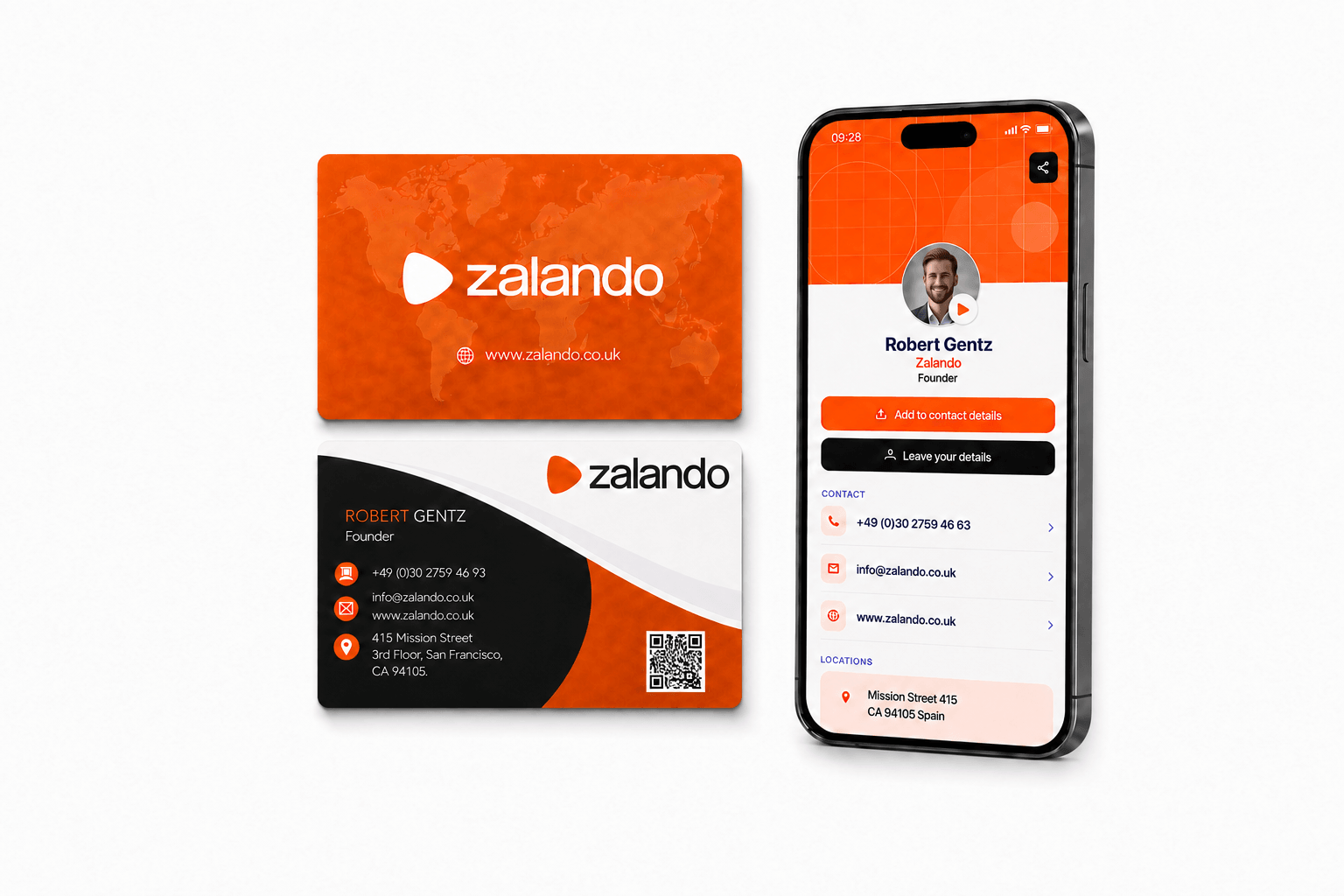
NFC isn’t limited to payments. The technology is also increasingly being used for other applications, such as checking in on public transportation, unlocking hotel rooms, or even sharing contact information with digital business cards. It offers a seamless experience, allowing you to quickly transfer information or perform an action without the need for physical interaction.
Since NFC technology is constantly evolving, you can expect NFC payments to become even more popular. Companies and banks continue to invest in this technology, which means that NFC will be available in more and more places and for more applications.
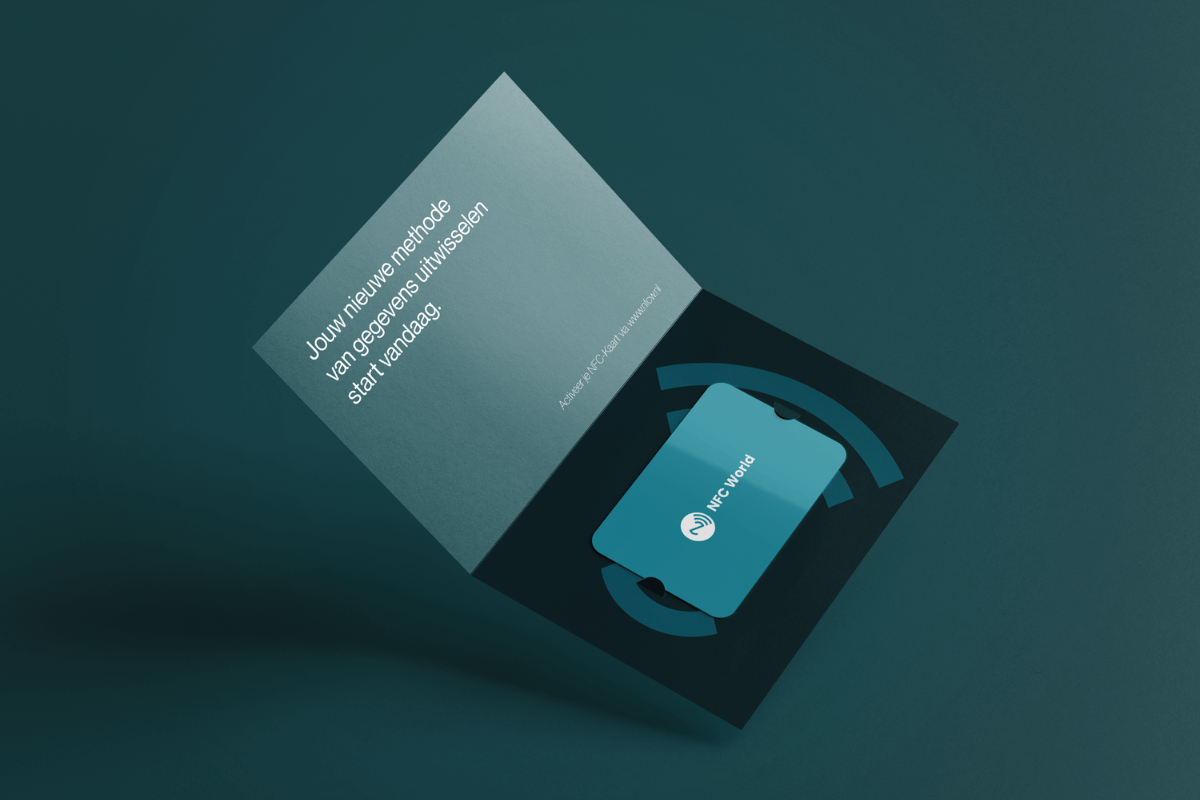
Want to experience for yourself how NFC payments and other NFC solutions can simplify your life? NFC World offers advanced NFC products that help you exchange data contactlessly. Think of digital business cards, which let you share your contact information quickly and easily. Just like with NFC payments, these cards are all about convenience, security, and efficiency. Take a look at our selection and discover how you can benefit from this smart technology!
Paying with your smartphone via NFC is a contactless payment method where you hold your smartphone up to a payment terminal. NFC technology makes this possible. It allows your phone to communicate with the terminal and send the payment information to the merchant. There are several ways to pay with your phone, depending on the type of phone you have and the app you use. The main advantage of paying with your smartphone is that you don’t need to carry physical cash or debit cards, and it’s secure thanks to numerous security features.
The ATM contains an NFC chip that can communicate with other NFC chips, such as those in your phone or debit card. The NFC tag in the ATM emits radio waves that can be picked up by the antenna of the NFC tag in your phone. These radio waves allow certain tasks to be performed on your device. The radio waves can travel a maximum of 10 centimeters, which makes the technology ideal for payments. u003cbru003e u003cbru003eTo pay with NFC, your device must be equipped with an NFC chip, the software must be up to date, and you’ll need a mobile banking app and a checking account with a bank. For amounts under €25, you don’t need to enter a PIN, but for amounts over €50, you must enter your PIN at the ATM. There is a daily limit of €250.
On the iPhone, you can pay using Apple Pay. To set this up, open your bank’s app and look for Apple Pay in the settings. Then select a debit card and link the bank app to the Apple Pay app. To do this, open the Apple Pay app and select “Add Card.” Enter your name and card number, and accept the terms and conditions. Tap “Done,” and the card is linked. You can then easily make a payment by pressing the Home button twice and holding your device up to the ATM.
The biggest advantage of paying with your smartphone is that you no longer have to wait until you get home to make online payments or spend money at a payment terminal in a store. You also don’t need to carry physical cash or bank cards with you, making it easier to pay on the go. In addition, there are numerous security features available, such as biometric authentication and secure connections, which ensure that paying with your phone is safe. Paying with your smartphone is fast, simple, and available on many different platforms, offering a wide range of advantages over traditional